- Concrete stain vs paint vs coatings
- Acid stain vs water-based concrete stain
- Before you start: will your concrete take stain?
- Tools and materials
- How to stain concrete step by step
- How much concrete stain do you need?
- Common mistakes that ruin stained concrete
- How long does stained concrete last?
- Frequently asked questions
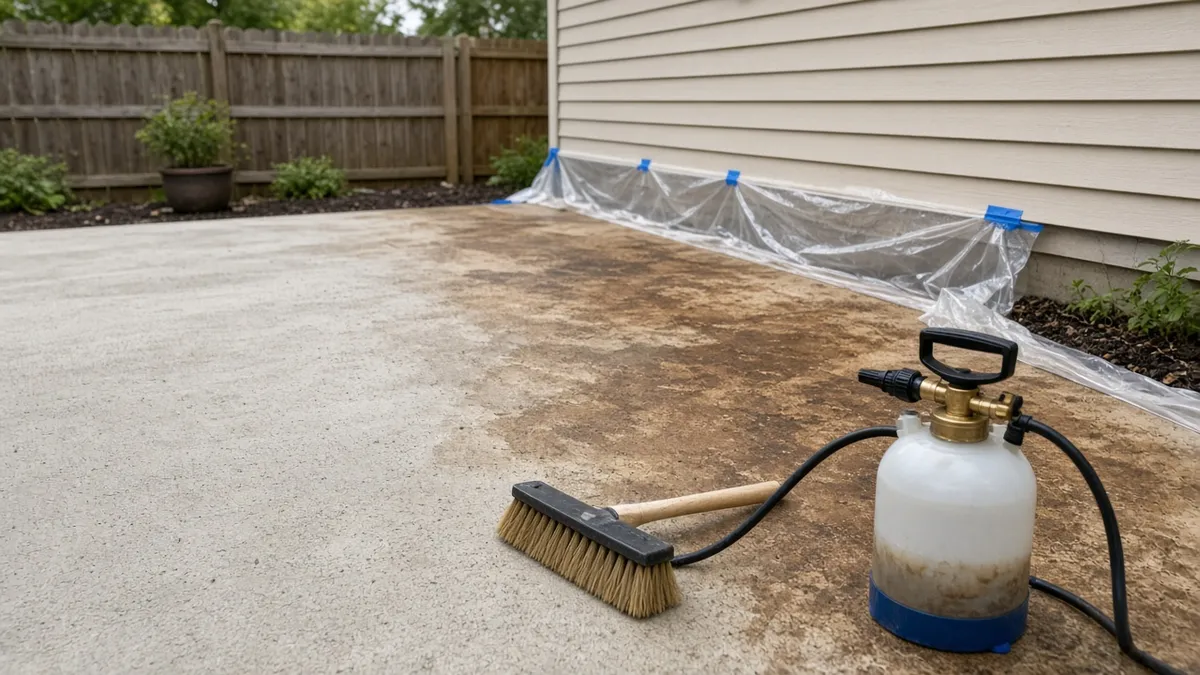
How to stain concrete: test that water soaks into the slab (if it beads, strip the sealer first), clean and degrease it, then mist on an acid stain or a water-based stain in thin, overlapping passes. Let it develop for the time on the label, neutralize and rinse acid stain until the water runs clear, let the slab dry, and finish with a concrete sealer. Acid stain gives marbled, translucent earth tones; water-based stain gives more even color in a wider range of shades.
Stain is one of the cheapest ways to change how a patio, garage floor, basement or walkway looks. It does not form a film like paint, so it will not peel. It also will not hide cracks, patches or uneven color in the slab. This guide covers which stain to choose, how to prep, how to apply it and the mistakes that cause blotchy results.
Concrete stain vs paint vs coatings
Choosing the right finish first saves a lot of regret. Here is how stain compares with the other common options.
| Finish | How it works | Look | Durability notes |
|---|---|---|---|
| Acid (reactive) stain | Reacts with lime in the concrete | Translucent, mottled, earth tones | Color is permanent; the sealer on top wears and is redone |
| Water-based stain | Penetrates and deposits pigment | More uniform, many colors | Good with a sealer; easier to apply |
| Concrete paint | Forms a film on top | Solid, opaque | Can peel on damp slabs; hides blemishes |
| Epoxy or polyaspartic | Thick film coating | Glossy, uniform, flake options | Very tough indoors; more prep and cost |
If you want solid color that hides old stains, see our guide to painting a concrete patio. For a hard-wearing garage floor, compare concrete floor coatings. If you want color that looks like part of the stone, stain is the right tool.
Acid stain vs water-based concrete stain
Acid stain is a mix of metallic salts, water and a mild acid. It reacts with the calcium hydroxide (lime) in cured concrete. Because every slab has a slightly different mix and finish, the color comes out variegated, with darker and lighter areas that look like natural stone or leather. The palette is limited mostly to browns, tans, greens and rust tones. You cannot predict the exact result, which is part of the charm.
Water-based stain is a blend of pigments in a water carrier, often with acrylic. It does not react chemically. It soaks into the pores and leaves color behind. You get a much wider range of colors, including grays, blues and black, with more predictable results and no neutralizing step.
Choose acid stain if you want a rich, one-of-a-kind look and your concrete is plain gray with no coatings. Choose water-based stain if you want a specific color, a more even result, or you are working on concrete that reacts unevenly to acid.
Before you start: will your concrete take stain?
Stain must soak in to work. Three quick checks:
- Water drop test. Sprinkle water on several spots. If it darkens the concrete and soaks in within a minute or two, stain can penetrate. If it beads up, a sealer, curing compound, wax or oil is in the way, and you will need to strip or grind it first.
- Age. New concrete needs to cure before staining. The usual guidance for acid stain is to wait at least 28 days (some makers say 30) so the slab has developed enough lime and dried out. Follow the stain maker's instructions.
- Condition. Stain highlights everything. Patches, cracks, trowel marks, rust and old adhesive will show through, often darker. Repair cracks first with the steps in how to fix cracks in concrete and accept that patched areas will take color differently.
Also note that acid stain needs real cement to react with. Some overlays and patching products contain little free lime and stain lighter or barely at all. Test in a hidden spot first.
Tools and materials
- Acid stain or water-based concrete stain
- Concrete cleaner or degreaser, and a stiff nylon scrub brush
- Plastic (not metal) pump sprayer, plus a spare for clean water
- Nylon-bristle brush or a sponge for blending edges
- Painter's tape and plastic sheeting to protect walls, siding and plants
- Baking soda or a neutralizer (for acid stain), buckets and a wet vacuum or squeegee
- Concrete sealer compatible with your stain, and a roller or sprayer
- Gloves, eye protection, rubber boots and a respirator rated for the product
How to stain concrete step by step
Stain will not hide efflorescence on concrete; clean the salts and wait until the bloom stops first.
Step 1: Clean and degrease
Sweep, then scrub with a concrete cleaner. Oil and grease block stain completely, so treat any spots with the methods in our guide to removing oil stains from concrete. Rinse thoroughly and let the slab dry, usually overnight.
Step 2: Protect everything nearby
Tape plastic sheeting to walls, door frames and siding. Acid stain will permanently mark stucco, stone and wood. Cover plants and wet down the soil around them.
Step 3: Test a small area
Apply stain to a hidden spot or a leftover piece of concrete. Let it develop, then wet it to preview how it will look under a sealer. This is the single best way to avoid surprises.
Step 4: Apply the stain
Work on a dry slab in mild weather, out of direct hot sun. Mist the stain on with the pump sprayer in a circular, overlapping pattern, keeping the nozzle a steady distance from the surface. Immediately work it in with a nylon brush in random, overlapping strokes to avoid lap lines. Do not let puddles sit. For water-based stain, keep a wet edge and work in small sections.
Step 5: Let it develop and add a second coat if needed
Acid stain keeps reacting for several hours. Wait the time on the label before judging the color. Apply a second coat for deeper color, or spot-blend lighter areas.
Step 6: Neutralize and rinse (acid stain only)
Acid stain leaves a residue that must be removed before sealing. Scrub with a neutralizer or a mix of baking soda and water, then rinse and wet-vac or squeegee repeatedly until the water runs clear. Collect the rinse water rather than washing it into storm drains or garden beds, and dispose of it according to local rules.
Step 7: Let it dry and seal
Let the slab dry completely, often 24 hours. Then apply a compatible sealer in thin coats. Sealer deepens the color, protects it from wear and stops water getting in. A solvent-based acrylic gives a richer "wet look" outdoors; water-based sealers are lower odor for indoor floors. Our concrete driveway sealing guide covers sealer types and recoating.
How much concrete stain do you need?
Coverage depends on the product, the porosity of the concrete and the number of coats. Acid stain labels typically list anywhere from about 150 to 400 square feet per gallon per coat, and dense, smooth slabs take less than rough, porous ones. Always check the label.
To estimate, measure the area in square feet, divide by the label coverage and multiply by the number of coats, then add about 10 percent. Example: a 12 x 16 ft patio is 192 square feet. At 300 square feet per gallon with two coats, you need about 1.3 gallons, so buy 1.5 to 2 gallons. If you are also pouring new concrete for an extension, our concrete slab calculator gives the volume.
Common mistakes that ruin stained concrete
- Staining over a sealer. If water beads, stain sits on top and wipes away. Strip first.
- Skipping the test patch. Acid stain color varies a lot from slab to slab.
- Using a metal sprayer. Acid stain can corrode metal parts and add rust spots.
- Rolling stain on. Rollers leave lap marks. Spray and brush instead.
- Not neutralizing acid stain. Residue causes sealer to peel or haze.
- Sealing too soon. Trapped moisture can turn the sealer cloudy.
- Expecting it to hide flaws. Stain is translucent. If you need to hide patches, paint or a coating is better.
How long does stained concrete last?
The color from an acid stain is permanent because it is part of the concrete surface. What wears is the sealer on top. Outdoor patios and walkways usually need resealing every few years, and high-traffic indoor floors may need a wax or finish maintained more often. Water-based stain also lasts well under a sealer, but because the color sits in the pores, it can fade faster in sun and heavy foot traffic if the sealer wears through.
For a new walkway you plan to stain later, see our guide to pouring a concrete walkway, and use the concrete calculator to size the pour.
Prefer a pattern to a color? See how to lay pavers over a concrete patio.
Frequently asked questions
Can you stain old concrete?
Yes, as long as water soaks into it. Clean and degrease the slab, strip any sealer or paint, and test a small area. Old concrete often takes acid stain well, but patches and wear marks will show through.
How long after pouring can you stain concrete?
Most acid stain makers recommend waiting about 28 days so the concrete cures and dries. Water-based stains sometimes allow less time, so follow the product label.
Is acid stain or water-based stain better?
Neither is better overall. Acid stain gives a permanent, marbled, natural-stone look in earth tones. Water-based stain gives more even and predictable color in a much wider range of shades and is easier to apply.
Do you have to seal stained concrete?
Yes, in almost every case. A sealer protects the color from wear and water and brings out its depth. Acid-stained concrete must be neutralized, rinsed and dried before sealing.
Will stain cover cracks and patches?
No. Stain is translucent, so cracks, patches and old marks usually show through and often look darker. If you need to hide flaws, a concrete paint or a solid coating is a better choice.
Is staining concrete cheaper than painting it?
Material costs are similar, and both are budget-friendly finishes. Stain avoids peeling, but it needs a sealer and, for acid stain, a neutralizing step. Paint covers flaws but may need touching up sooner on damp slabs.