- What exposed aggregate concrete is
- Three ways to get the stone on top
- How exposed aggregate is made, step by step
- Getting the timing right
- Choosing the aggregate
- Exposed aggregate vs other finishes
- Pros and cons
- Is exposed aggregate a good DIY project?
- Caring for exposed aggregate
- Plan your exposed aggregate slab
- Frequently asked questions
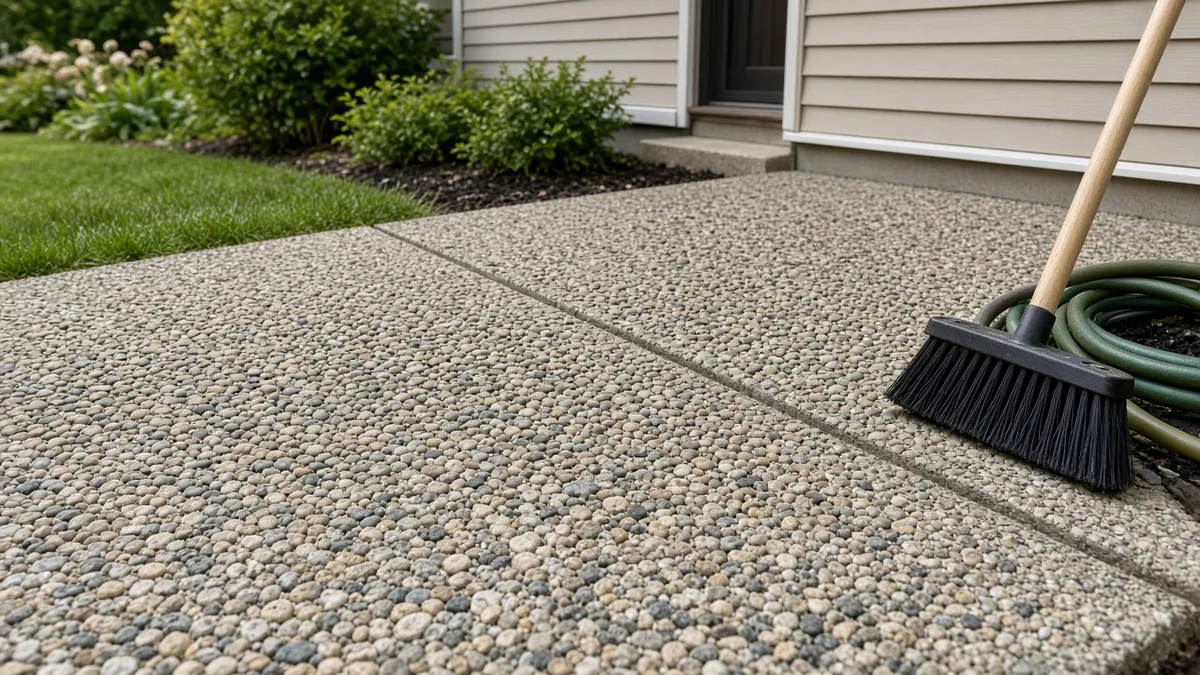
Exposed aggregate concrete is concrete whose thin top layer of cement paste has been washed or worn away so the stones in the mix show on the surface. The result is a textured, pebbly finish that is slip resistant, hides dirt well and suits driveways, patios, pool decks and walkways. Most residential exposed aggregate is made by placing and finishing the slab as usual, spraying a surface retarder on the top so the paste there stays soft, and then washing that paste off with a hose and brush or a pressure washer a few hours later.
This guide explains how exposed aggregate works, the three ways to get stone into the surface, the step-by-step process and timing, how it compares with other finishes, and how to look after it. Planning a new slab? Start with the concrete calculator to size your order.
What exposed aggregate concrete is
Every concrete slab is mostly aggregate: sand and gravel or crushed stone held together by cement paste. On a normal slab, finishing brings a smooth layer of paste, often called cream, to the top and buries the stone. An exposed aggregate finish removes that layer so the tops of the stones become the walking surface.
How much stone shows is called the depth of exposure. A light exposure looks like coarse sandpaper. A medium or deep exposure shows the rounded tops of the stones clearly. Many contractors aim to expose roughly a third of each stone so the rest stays locked in the concrete.
Three ways to get the stone on top
Integral mix
The decorative stone is part of the concrete mix delivered by the truck. The whole slab is the same, and the finish comes from washing away the surface paste. This is the most common method for driveways and large patios because it is simple to place. Ask your supplier for an exposed aggregate mix; our guide on how to order ready-mix concrete covers what to tell the plant.
Seeding
Plain concrete is placed and screeded, then decorative stone is broadcast by hand across the wet surface and pressed in with a float until it is just covered by paste. Seeding uses less decorative stone because it is only in the top layer, and it allows heavier exposure, but it takes skill to get an even spread.
Topping layer
A base slab is placed a little below finished height, and a thin layer of concrete containing the decorative stone is placed on top while the base is still workable. This is more common on commercial or architectural work than on a typical home driveway.
How exposed aggregate is made, step by step
The process starts like any other slab. Our guide to pouring a small concrete slab covers the base, forms and placing in detail.
- Prepare the base and forms. A compacted gravel base and straight, braced forms matter even more here, because the textured surface makes low spots and wavy edges obvious.
- Place and screed the concrete. Avoid adding extra water to make it easier to work. A wet mix lets the stones sink, so there is less to expose.
- Seed if needed. If you are seeding, broadcast the stone evenly now and embed it with a float.
- Float, edge and joint. Bull float the surface, tool the edges and cut or tool control joints. Do not overwork the surface; you want the stone near the top, not driven down.
- Apply a surface retarder. Once finishing is done, spray a surface retarder evenly over the whole slab. It slows the hardening of the top layer of paste while the concrete underneath sets normally. Many products are colored so you can see full coverage. Some crews cover the slab with plastic after spraying to keep the surface from drying out.
- Wash off the surface paste. When the slab is firm enough to walk on with only very shallow footprints, loosen the soft paste with a stiff broom and rinse it away with water or a pressure washer, exposing the stone. Work in sections and keep the dirty slurry moving off the slab.
- Cure the slab. Keep the concrete moist or use a curing method suited to decorative work, as you would for any slab.
- Clean up the haze. A light cement haze often remains on the stones. Some contractors remove it after the concrete has cured with a diluted acid cleaner made for masonry, following the label and wearing eye and skin protection, then rinse thoroughly.
- Seal, if desired. A sealer can deepen the stone color and make cleaning easier. Apply it only after the slab has cured and is fully dry.
Getting the timing right
Timing is the hardest part of exposed aggregate work. Wash too early and you dig into the slab, loosening stones. Wash too late and the paste has hardened, so it comes off in patches or not at all.
Retarder manufacturers publish working windows for their products. One maker of a popular retarder, for example, suggests removing it about six hours after application and within a 5 to 12 hour range, with warm days calling for same-day washing and cool days allowing a wait until the next day, but not beyond 24 hours. Always follow the instructions for the product you use.
A simple field test helps: rub a small area with your gloved hand or a brush. If paste comes away and the stone stays put, it is time. If stones pop loose, wait. If nothing comes off, you may be late, and a pressure washer with a wider tip becomes necessary. Hot, windy weather speeds everything up; cold weather slows it down. Our guide to pouring concrete in cold weather explains how temperature changes setting time.
Choosing the aggregate
The stone you choose sets the look of the finished slab.
| Aggregate | Look | Notes |
|---|---|---|
| Rounded river rock or pea gravel | Smooth, pebbly | Comfortable underfoot; common for patios and pool decks |
| Crushed stone | Angular, rougher | Good grip; can feel sharper on bare feet |
| Colored or decorative stone | Custom color | Often used for seeding to save cost |
| Mixed sizes | Natural, varied | Hides small imperfections well |
Smaller, rounded stones make a surface that is easier on bare feet. Larger stones give a bolder look but need deeper concrete cover to stay locked in. Ask your supplier what they stock locally, because availability varies by region.
Exposed aggregate vs other finishes
| Finish | Grip | Look | DIY difficulty |
|---|---|---|---|
| Broom finish | Good | Plain, lined | Easy |
| Exposed aggregate | Very good | Pebbly, textured | Moderate to hard |
| Stamped concrete | Varies; can be slick when sealed | Patterned like stone or brick | Hard |
| Smooth trowel | Low outdoors when wet | Clean, modern | Moderate |
A broom finish is the simplest slip-resistant choice and the easiest for a first-timer. Exposed aggregate costs more in materials and labor but gives a more decorative surface that hides tire marks and dirt. If you want color without texture, staining concrete is another option.
Pros and cons
Pros
- Slip resistant, even when wet
- Hides dirt, tire marks and small stains
- Decorative look without a separate coating
- Stone surface resists wear from foot and car traffic
Cons
- Timing makes it harder to do yourself than a broom finish
- Textured surface can feel rough on bare feet with angular stone
- Repairs are hard to match perfectly
- Usually costs more than plain concrete because of the stone and extra labor
Is exposed aggregate a good DIY project?
For a small walkway or patio, a confident DIYer with a helper can do it, especially with an integral mix and a retarder. The key is planning: have the retarder, sprayer, hose, stiff broom and pressure washer ready before the truck arrives, and test the wash timing on a small edge first. For driveways and large areas, the amount of concrete and the short wash window make a professional crew the safer choice. Our step-by-step for pouring a concrete walkway is a good small project to practise the basics first.
Wear gloves, eye protection and long sleeves throughout. Wet concrete is caustic and can burn skin, and retarders and cleaners have their own safety instructions.
Caring for exposed aggregate
- Clean it gently. A stiff brush, mild detergent and a garden hose handle most dirt. Use a pressure washer with a wide tip and moderate pressure so you do not loosen stones. Our guide to cleaning a concrete patio covers the method.
- Reseal on schedule. If the slab is sealed, reseal when water stops beading on the surface, following the sealer label.
- Be careful with deicers. Some deicing salts can damage concrete surfaces; see is salt bad for concrete before winter.
- Keep joints clear. Pull weeds and refill joint sealant where needed so water does not get under the slab.
Plan your exposed aggregate slab
Exposed aggregate uses the same volume of concrete as any slab of the same size. Use the concrete slab calculator for patios and walkways, or the concrete driveway calculator for a driveway, and add a little extra for waste. Then talk to your ready-mix supplier about an exposed aggregate mix and the stone sizes they carry.
Frequently asked questions
What is exposed aggregate concrete?
It is concrete whose thin top layer of cement paste has been washed or worn away so the stones in the mix show on the surface. The finish is textured, slip resistant and good at hiding dirt.
How is exposed aggregate concrete made?
Most residential slabs are placed and finished as usual, then sprayed with a surface retarder that keeps the top paste soft. A few hours later the paste is brushed and washed off to reveal the stone.
When do you wash off exposed aggregate?
Follow the retarder label. One manufacturer suggests about six hours after application, within a 5 to 12 hour window and no later than 24 hours. Test a small area first: the paste should come away while the stone stays put.
Is exposed aggregate more expensive than a broom finish?
Usually, yes. It needs decorative stone or a special mix, a retarder and extra labor at a time-sensitive stage. A broom finish is the simpler, lower-cost slip-resistant option.
Is exposed aggregate slippery?
It is generally one of the more slip-resistant concrete finishes, because the stone texture gives grip even when wet. A glossy sealer can reduce grip, so choose a sealer suited to walking surfaces.
Can I do exposed aggregate myself?
A small patio or walkway is possible for a confident DIYer with a helper and an integral mix. For driveways and large slabs, the volume of concrete and the short wash window make a professional crew the safer choice.