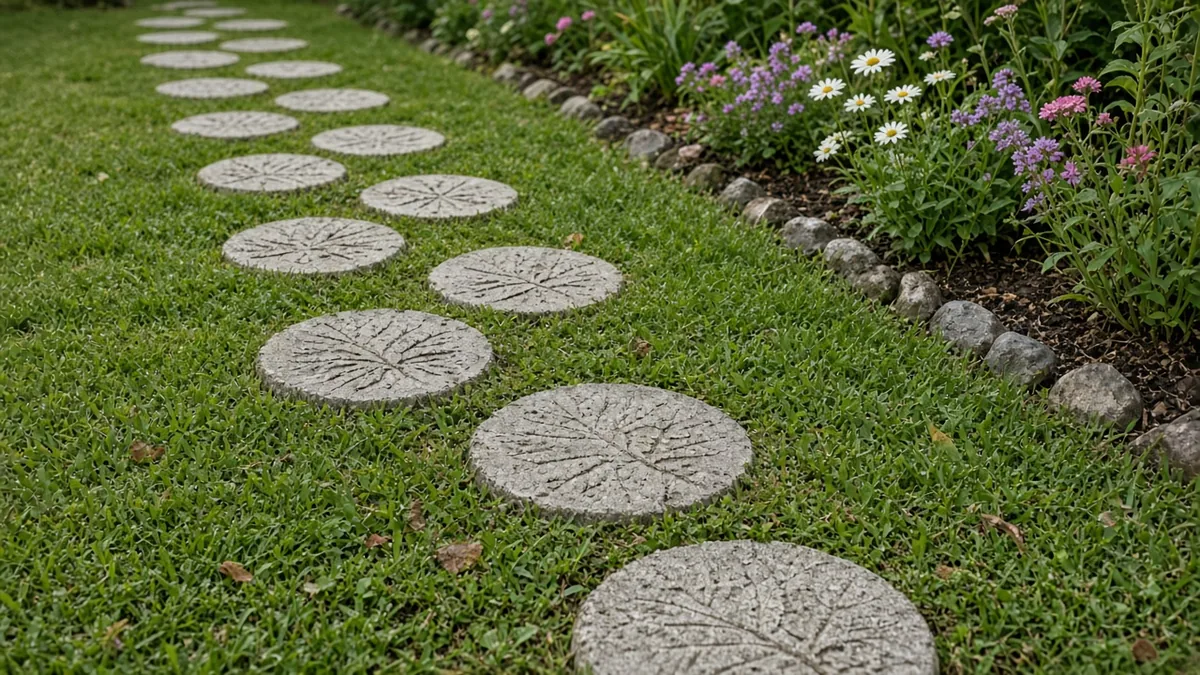
Concrete stepping stones are small cast slabs, usually 12 to 18 inches across and about 2 inches thick, that you set into a lawn or garden bed to make a path. You can make them at home with a mold, a bag of concrete or sand mix and a weekend of curing time. An 80-pound bag of concrete mix makes roughly four 12-inch round stones or two 16-inch square stones at 2 inches thick.
This guide covers choosing molds and mix, mixing and pouring, decorating, curing and setting the stones so they stay level. If you would rather pour one continuous path, see how to pour a concrete walkway instead.
What you need
- Molds (see the next section)
- Concrete mix or sand mix (topping mix)
- Mold release: cooking spray, a light coat of oil or a commercial release agent
- Wheelbarrow or mixing tub, hoe or shovel (mixing in a wheelbarrow shows the technique)
- Water and a measuring container
- Trowel or a scrap of board to level the top
- Hardware cloth or small pieces of wire mesh (optional, for larger stones)
- Plastic sheet or damp burlap for curing
- Gloves, eye protection and a dust mask for dry mix
Wet cement is alkaline and can irritate skin, so wear gloves and avoid kneeling in it.
Stepping stone molds
You do not need a special mold. Anything with smooth sides, a flat bottom and the right depth works.
| Mold | Pros | Watch out for |
|---|---|---|
| Plastic plant saucer | Cheap, round, easy release | Thin ones flex; support the sides |
| Store-bought stepping stone mold | Consistent shape, built for the job | Costs more |
| Cake or baking pan | Smooth, rigid | Do not reuse for food afterward |
| Wood frame on plastic sheeting | Any size or shape, reusable | Build it square and screw it, do not nail |
| Cardboard box lined with plastic | Free, good for one-offs | Edges can bulge; brace the sides |
Aim for a depth of about 2 inches. Thinner stones crack more easily under foot traffic. For stones larger than about 16 inches, go to 2-1/2 inches or add a piece of wire mesh in the middle of the pour.
Coat the inside of every mold with release before you mix. It is the difference between a stone that pops out and one that has to be broken out.
Choosing the mix
You have two good choices:
- Concrete mix contains gravel. It is strong and cheap, and it is the best choice for plain, thicker stones.
- Sand mix (also called topping mix) has no large gravel. It fills small molds and fine details better, so pressed leaves and handprints come out crisp.
Many DIYers use sand mix for decorative stones and concrete mix for plain path stones. Either way, use fresh bags that have stayed dry. A bag with hard lumps has already started to set.
How many stepping stones per bag of concrete
Work out the volume of one stone, then divide the bag yield by it. Typical bag yields are about 0.60 cubic feet for an 80-pound bag, 0.45 for a 60-pound bag and 0.30 for a 40-pound bag.
| Stone size (2 inches thick) | Volume per stone | Stones per 80 lb bag | Stones per 60 lb bag |
|---|---|---|---|
| 12 in round | about 0.13 cu ft | about 4 | about 3 |
| 14 in round | about 0.18 cu ft | about 3 | about 2 |
| 12 x 12 in square | about 0.17 cu ft | about 3 | about 2 |
| 16 x 16 in square | about 0.30 cu ft | about 2 | about 1 |
Round down and buy one extra bag for waste and spills. For other sizes or thicknesses, the concrete bag calculator does the math for you.
How to make concrete stepping stones
- Set up on a flat surface. Put molds on a level table, plywood or patio covered with plastic. A tilted mold gives a wedge-shaped stone.
- Coat the molds. Spray or wipe on release, covering sides and bottom.
- Mix in batches. Add water slowly to the dry mix until it is like thick oatmeal: it should hold a shape on the hoe without slumping into soup. Too much water weakens the stone and causes surface dusting.
- Fill halfway. Pour or scoop the mix into the mold to about half depth.
- Add mesh if you are using it. Lay a piece of hardware cloth or wire mesh cut an inch smaller than the mold, then fill to the top.
- Tap out air. Tap the sides of the mold with a rubber mallet or jiggle the mold for a minute. Small bubbles rise and the surface flattens.
- Level the top. Drag a board across the rim, then smooth lightly with a trowel. Do not overwork it; that pulls water to the surface.
- Decorate within the first hour. See the ideas below.
- Cover and cure. Cover with plastic and leave the stones undisturbed.
Decorative stepping stones
Decorate while the surface is still soft, usually within 30 to 60 minutes of pouring.
- Leaf prints. Press a large leaf, vein side down, into the surface, then peel it away after the stone has set.
- Handprints and footprints. A family favorite. Press firmly, lift straight up, and write the year with a stick.
- Mosaic. Press broken tile, glass marbles or smooth pebbles into the top, leaving them slightly proud of the surface.
- Color. Add concrete colorant to the mix, or stain the cured stones. Our guide to staining concrete covers stains and sealers.
- Texture for grip. A light broom or brush pass makes the surface less slippery when wet.
Keep decorations nearly flush. Raised edges catch shoes and mower blades.
Curing the stones
Curing is where homemade stones succeed or fail. Concrete gets its strength from water reacting with cement, so the stones must stay damp while they harden.
- Keep them covered and damp for several days. Mist them if they start to look pale and dry.
- Most stones can come out of the mold after about 24 to 48 hours. Flip the mold onto a soft surface and tap the bottom.
- Let them keep curing in the shade before setting them in the yard, ideally a week or more. Concrete keeps gaining strength for weeks.
- Avoid casting when it may freeze. Fresh concrete that freezes is weak and flaky. If you must work in cool weather, read our tips on pouring concrete in cold weather, or simply cast indoors in a garage.
How to lay stepping stones
- Lay out the path. Set the stones on the grass where you want them and walk the route. Most people like centers about 18 to 24 inches apart, but space them to your own stride.
- Cut around each stone. Use a spade to cut the turf along the edge, then lift the stone aside.
- Dig the bed. Remove soil to the stone's thickness plus about an inch.
- Add a sand base. Spread about an inch of sand or fine gravel and level it.
- Set and level. Place the stone, check with a level and tap it down with a rubber mallet. Add or remove sand until it sits flush with the grass, or a hair above it so water runs off.
- Fill the edges. Brush soil or sand into the gap around the stone and water it in.
Set flush with the lawn, stones let a mower pass right over them.
Common mistakes
- Too much water in the mix. The stones look fine, then dust and crumble.
- Stones too thin. Under 1-1/2 inches, they crack easily.
- Demolding too early. Edges break off if the concrete is still green.
- No base under the stone. Stones set straight on soil rock and sink.
- Drying out in the sun. Fast drying causes cracks and weak surfaces.
Once you have the technique down, the same mixing and curing skills carry over to DIY concrete planters and other small casts.
Frequently asked questions
How thick should concrete stepping stones be?
About 2 inches suits most stones up to 16 inches across. Go to about 2-1/2 inches or add wire mesh for larger stones or areas with heavier use.
How many stepping stones can I make from one bag of concrete?
An 80-pound bag (about 0.60 cubic feet) makes roughly four 12-inch round stones or two 16-inch square stones at 2 inches thick. A 60-pound bag makes about three 12-inch rounds.
Should I use concrete mix or sand mix for stepping stones?
Concrete mix is strong and good for plain stones. Sand mix has no large gravel, so it fills small molds and picks up fine details such as leaf prints and handprints better.
How long do stepping stones need to dry before you remove them from the mold?
Usually about 24 to 48 hours. Keep them damp and covered during that time, then let them keep curing in the shade for about a week before setting them in the yard.
What can I use as a stepping stone mold?
Plastic plant saucers, store-bought stepping stone molds, old baking pans, simple wood frames on plastic sheeting, or a braced cardboard box lined with plastic. Coat any mold with release first.
How do you keep stepping stones from sinking?
Dig out the soil, add about an inch of sand or fine gravel, level the base and tap the stone down so it sits flush. Stones set directly on soil tend to rock and sink.