- Why oil stains are hard to remove
- Safety and runoff first
- Method 1: Fresh spills (minutes to hours old)
- Method 2: Recent stains (days to weeks old)
- Method 3: Old, set-in stains (the poultice)
- Method 4: Pressure washing (as a finisher)
- Household products: what works and what does not
- Garage floors with coatings or sealers
- Other automotive fluids
- How long each method takes
- Ghost stains that will not go away
- Prevent the next stain
- When stains point to a bigger problem
- Frequently asked questions
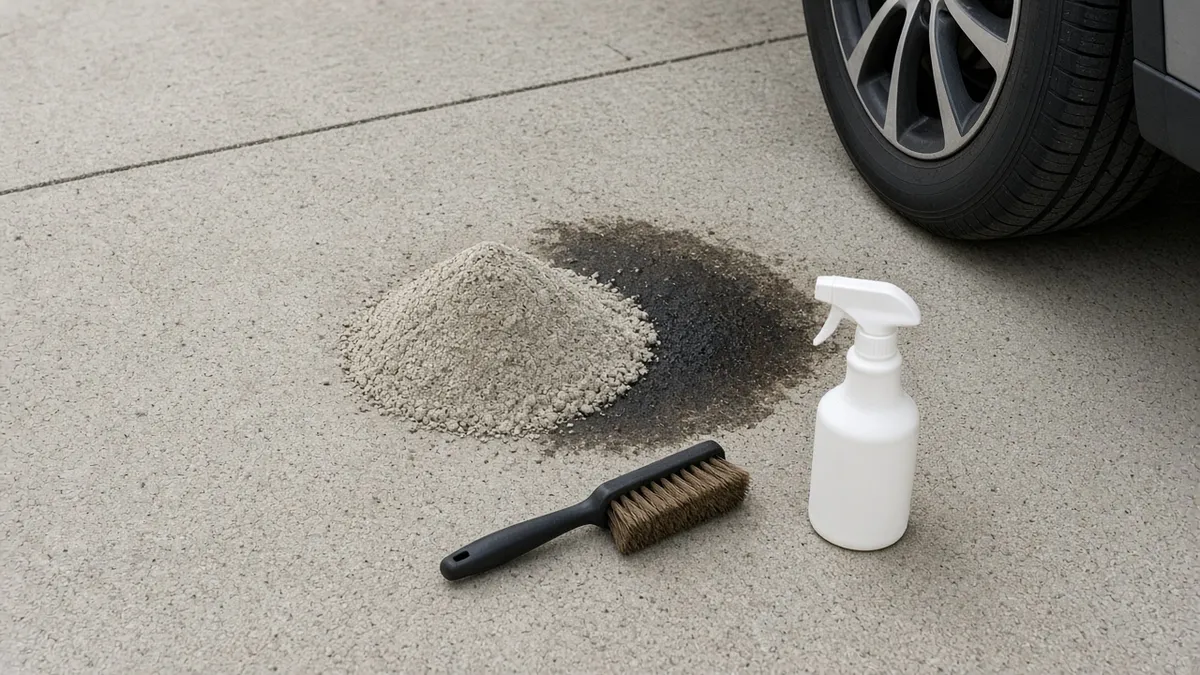
How to remove oil stains from concrete: for a fresh spill, blot up the liquid, cover the spot with clay cat litter or another dry absorbent, grind it in with your shoe, leave it overnight and sweep it up. Then scrub what is left with a concrete degreaser and a stiff brush and rinse. For an old, soaked-in stain, spread a poultice (absorbent mixed with a solvent or degreaser) over it, let it dry for about 24 hours so it pulls the oil out, then brush it off and repeat if needed. Once the slab is clean, a penetrating sealer makes the next drip far easier to wipe up.
Oil soaks into concrete because concrete is porous. The faster you act, the less of it gets deep into the pores. This guide covers fresh spills, set-in stains and the stubborn ghost stains that never quite fade, plus how to keep runoff out of storm drains.
Why oil stains are hard to remove
Concrete looks solid, but it is full of tiny capillary pores. Motor oil is thin enough to wick into them, and once it is a quarter inch below the surface, scrubbing the top does little. That is why the methods that work best either pull oil back out (absorbents and poultices) or break it into something water can rinse away (degreasers and detergents). Pressure washing alone often just spreads the stain.
Safety and runoff first
- Wear gloves and eye protection, especially with degreasers and solvents.
- Work in a ventilated area if you use a solvent indoors in a garage.
- Do not wash oil into the street gutter or storm drain. Storm drains usually flow straight to creeks without treatment. Absorb the oil, sweep up the absorbent and bag it, and rinse sparingly onto a lawn edge or into a contained area. Check your local rules for disposing of oily waste.
- Never mix cleaning chemicals, and avoid strong acids on concrete, which etch the surface.
A dry white film is usually not oil; it is often efflorescence on concrete, a salt deposit you brush off differently.
Method 1: Fresh spills (minutes to hours old)
- Blot: soak up liquid oil with paper towels or rags. Do not wipe, which spreads it.
- Absorb: pour a thick layer of clay cat litter (the non-clumping kind works well), sawdust, cornstarch or a commercial oil absorbent over the spot.
- Grind it in: step on the litter and twist your shoe to crush it into the stain. Fine particles absorb faster.
- Wait: leave it several hours, ideally overnight.
- Sweep and repeat: sweep it up and bag it. If the spot still looks wet, repeat.
- Wash: scrub the area with hot water and dish soap or a concrete degreaser, then rinse lightly.
Done quickly, this often removes a fresh drip completely.
Method 2: Recent stains (days to weeks old)
- Sweep the area and wet it slightly.
- Apply a commercial concrete degreaser as directed. These are usually detergent or citrus based and are made to emulsify oil.
- Let it dwell for the time on the label, usually 5 to 15 minutes. Do not let it dry out.
- Scrub hard with a stiff nylon brush (not wire, which can mark the surface).
- Rinse and let the slab dry fully before you judge the result. Wet concrete hides stains.
- Repeat once or twice on dark spots.
A biological (enzyme or microbe) oil cleaner is another option. It works more slowly, often over several days, but can lift oil from deeper in the slab.
Method 3: Old, set-in stains (the poultice)
For stains that have been there for months, a poultice works best. The idea is simple: a paste that dissolves the oil and then draws it up into the drying absorbent.
- Mix the paste: combine an absorbent (finely crushed clay cat litter, diatomaceous earth or fuller's earth) with a solvent or degreaser until it is like peanut butter.
- Spread it: apply it about 1/4 to 1/2 inch thick, extending an inch past the edge of the stain.
- Cover: lay plastic over it and tape the edges, which slows drying and gives the solvent time to work.
- Wait: after about 24 hours, remove the plastic and let the poultice dry completely.
- Remove: scrape and brush it off, bag it, and rinse the area.
- Repeat: deep stains often need two or three rounds. Each round should look lighter.
This is the method the U.S. General Services Administration describes for petroleum stains on concrete, and it is the most reliable way to fade an old stain without damaging the surface.
Method 4: Pressure washing (as a finisher)
A pressure washer helps once the oil has been lifted. Use a degreaser first, then wash with a surface cleaner attachment or a 25 to 40 degree tip, keeping the nozzle moving and at a consistent distance so you do not etch lines in the concrete. Hot-water machines work better on oil but are mostly rental or pro tools. Pressure washing on its own, without degreaser, rarely removes a soaked-in stain.
Household products: what works and what does not
| Product | Works on | Notes |
|---|---|---|
| Clay cat litter | fresh spills | cheap, absorbs well, grind it in |
| Dish soap and hot water | light film | good follow-up after absorbent |
| Baking soda | light stains | mild; scrub as a paste, rinse |
| Laundry detergent | light to medium | scrub and let it dwell |
| Concrete degreaser | medium | the best all-round option |
| Poultice | old stains | slow, but most effective |
| Cola | myth-level | the mild acid does little on real oil |
| Bleach | not for oil | does not dissolve oil; avoid mixing |
Garage floors with coatings or sealers
If your garage floor has an epoxy coating or a sealer, oil sits on top and wipes up with a degreaser and a rag. Do not use solvents that the coating maker warns against. On bare garage concrete, the methods above apply, and a coating is worth considering afterward; our garage floor coating guide explains the options.
Other automotive fluids
Not every driveway stain is motor oil, and a few behave differently:
- Transmission and power steering fluid: these are oil based and respond to the same absorb, degrease and poultice steps. They are often red when fresh, then darken.
- Brake fluid: it is not oil and can damage some coatings. Blot it, then wash with detergent and water.
- Coolant (antifreeze): it is water soluble, so it rinses out with soapy water. It is toxic and sweet tasting to pets, so clean it up right away and keep animals off the spot.
- Grease: scrape off as much as possible with a plastic putty knife first, then treat it like an old oil stain.
- Rust-colored marks: these are usually from metal, fertilizer or a car part, not oil. Oil cleaners will not help; use a rust remover made for concrete and follow the label.
If you are not sure what dripped, start with the gentlest method (absorbent, then dish soap and water) and work up.
How long each method takes
| Stain age | Best method | Typical time |
|---|---|---|
| Minutes to hours | absorbent, then soap wash | overnight |
| Days to weeks | concrete degreaser and scrubbing | 30 to 60 minutes, 1 to 3 rounds |
| Months or years | poultice | 1 to 3 days per round, 2 to 3 rounds |
Ghost stains that will not go away
Sometimes a faint shadow remains after several rounds. That usually means oil is deep in the slab or the concrete itself was discolored. Options:
- Run another poultice round or two, and give it time.
- Clean the whole driveway so the spot blends in. A clean driveway with a light shadow often looks better than a dirty driveway with a bright clean patch.
- Use a concrete stain or a resurfacer if appearance really matters; see our concrete leveling and resurfacing guide.
Prevent the next stain
- Seal the driveway: a penetrating sealer slows oil from soaking in. Our driveway sealing guide covers timing and products. Clean stains first, because sealer locks them in.
- Use a drip pan or mat under cars that leak, and fix the leak.
- Keep absorbent on hand for quick cleanup.
- Clean before winter: oil and salt together are tough on a driveway; see whether salt is bad for concrete.
When stains point to a bigger problem
Large oil-darkened areas around cracks or spalling can hide damage. If the surface is flaking or cracking, clean it and then see how to fix cracks in concrete before sealing.
Once it is clean, you can think about staining a concrete patio for color.
For a full top-to-bottom wash of the rest of the slab, see how to clean a concrete patio.
Frequently asked questions
Does cat litter really remove oil stains from concrete?
Clay cat litter works well on fresh spills because it absorbs liquid oil before it soaks deep into the slab. Grind it in with your shoe, leave it overnight and sweep it up. It does less on old stains, which need a degreaser or a poultice.
What is the best cleaner for oil stains on a driveway?
A commercial concrete degreaser scrubbed in with a stiff nylon brush is the best all-round option for most stains. For old, set-in stains, a poultice of absorbent mixed with a degreaser or solvent pulls oil out over about 24 hours.
Can I use a pressure washer to remove oil stains?
Use it as a finishing step after a degreaser. Pressure alone tends to spread oil and rarely lifts a soaked-in stain. Keep the nozzle moving so you do not etch lines in the surface, and do not wash oil into a storm drain.
Will bleach or vinegar remove oil from concrete?
No. Bleach and vinegar do not dissolve oil, and vinegar is a mild acid that can dull concrete. Use an absorbent, a detergent or a concrete degreaser instead, and never mix cleaning chemicals.
How do I get old oil stains out of a garage floor?
Use a poultice: mix crushed cat litter or diatomaceous earth with a degreaser into a thick paste, spread it over the stain, cover it with plastic for about a day, let it dry, then scrape it off. Repeat two or three times for deep stains.
Should I seal my driveway after removing oil stains?
Yes, once it is clean and fully dry. A penetrating sealer slows new oil from soaking in and makes drips easier to wipe up. Remove stains first, because sealer will lock any remaining stain into the surface.