- Concrete pump cost at a glance
- What a concrete pump does
- Line pump vs boom pump
- What drives the price
- When a pump saves money
- When you probably do not need one
- Example budget worksheet
- Ways to keep pump costs down
- Booking a pump: questions to ask
- Preparing the site for a pump
- Pump mix considerations
- Weather and timing
- DIY or hire a crew?
- Frequently asked questions
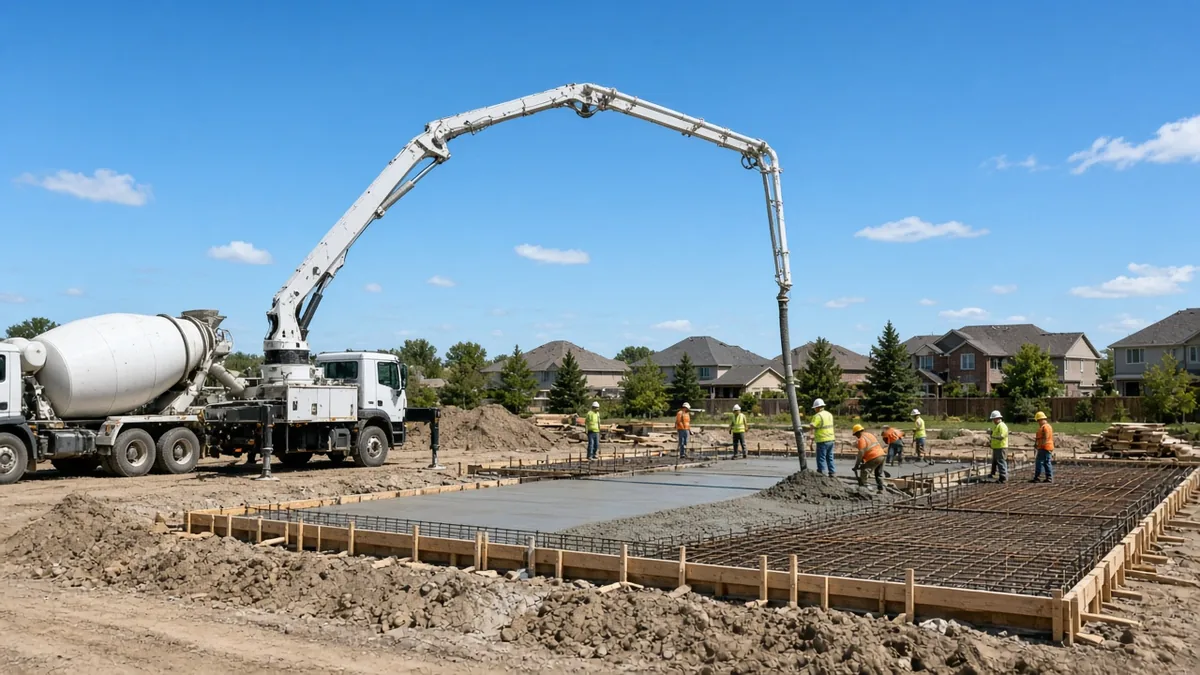
A concrete pump typically adds a few hundred to over a thousand dollars to a pour. Based on Angi's 2026 cost guide, a small line pump usually runs about $150–$200 an hour with a minimum charge of around $400–$600, while a boom pump runs about $200–$250 an hour with a minimum of around $800–$1,000. Some companies also add a small per-yard fee for every cubic yard pumped. For a DIY homeowner, the real question is whether the pump saves more in labour, time and finish quality than it costs. This guide explains the pump types, what drives the price, when a pump pays for itself and how to prepare so you are not paying for waiting time.
These are national ranges from a third-party cost guide, not quotes. Prices vary by region, season and supplier, so always get written quotes. Use our concrete cost calculator for the material side of the budget.
Concrete pump cost at a glance
| Pump type | Typical hourly rate | Typical minimum | Best for |
|---|---|---|---|
| Trailer pump | about $120–$180/hr | varies by supplier | small residential pours |
| Line pump | about $150–$200/hr | about $400–$600 | backyard slabs, footings, walkways |
| Boom pump | about $200–$250/hr | about $800–$1,000 | large slabs, long reach, over buildings |
| Specialty pump | about $250–$300/hr | about $1,000–$1,500 | high-rise or difficult access |
Source: Angi, concrete pumping cost guide, 2026 figures. Many companies also charge around $4–$6 per cubic yard pumped on top of the hourly rate.
What a concrete pump does
A ready-mix truck can only pour where its chute can reach, usually a few feet from where it can safely park. A pump takes the concrete from the truck and pushes it through a hose or a boom to the forms. That means:
- you can pour behind a house, over a fence or into a basement,
- the truck does not have to drive over your lawn, septic field or new paving,
- the crew spends less time moving concrete and more time placing and finishing it.
Line pump vs boom pump
Line pumps (also called ground or trailer pumps) push concrete through a flexible hose laid across the ground. The hose can be extended by adding sections. They suit most residential jobs: patios, small slabs, footings, walkways and fence-post holes in a row.
Boom pumps are truck-mounted with a folding arm that places concrete from above. They handle larger volumes faster and can reach over obstacles, but they need a solid, level place to set up their outriggers and cost more.
| Line pump | Boom pump | |
|---|---|---|
| Reach | follows the hose across the ground | swings over obstacles |
| Speed | moderate | fast |
| Setup space | small | needs space for outriggers |
| Typical use | backyard pours | large slabs, driveways, foundations |
| Cost | lower | higher |
What drives the price
Several factors change what you pay:
- Minimum charge. Most companies charge a minimum, often a few hours, even for a short pour.
- Travel. Long distances from the pump yard may add a fee.
- Volume. Some pumps charge per yard as well as per hour.
- Hose length or boom size. More hose or a bigger boom costs more.
- Waiting time. If the ready-mix truck is late or the forms are not ready, the clock is running.
- Clean-out and washout. Some suppliers charge for washing out the pump and disposing of leftover concrete.
- Weekend or early-morning work. Overtime rates may apply.
When a pump saves money
A pump is not just for big jobs. It can save money when:
- The pour is far from where the truck can park. Moving several yards of concrete by wheelbarrow takes many trips and a crew. Our wheelbarrow mixing guide shows how heavy each load is.
- You would otherwise pay extra truck time. Ready-mix suppliers often allow a set unloading time and then charge for extra minutes. A pump speeds unloading.
- Access would damage the yard. Repairing a lawn, sprinkler line or curb can cost more than the pump.
- The weather is hot. Concrete sets faster in heat, so placing it quickly helps the finish.
When you probably do not need one
- Small pours of a yard or less, where bagged concrete is practical. Our concrete bag calculator shows how many bags you need.
- The truck can reach the forms with its chute.
- A few fence posts or footings that you can fill from bags.
For posts, see how to set fence posts in concrete.
Example budget worksheet
Use this simple worksheet to compare options. Fill in your own quotes.
| Item | Your quote |
|---|---|
| Ready-mix concrete (yards × price per yard) | |
| Short-load fee, if under the supplier's minimum | |
| Pump minimum or hourly rate × expected hours | |
| Per-yard pump fee, if any | |
| Travel or fuel surcharge | |
| Washout or clean-up | |
| Extra labour if you do not use a pump | |
| Total |
Get your volume first with the concrete yard calculator or slab calculator. Order a little extra; running short mid-pour is far more expensive than a small leftover.
Ways to keep pump costs down
A few planning steps can keep the pump bill close to the minimum:
- Be ready before the pump arrives. Forms set, reinforcement tied, tools laid out and helpers on site. Most overruns come from waiting.
- Book the concrete and pump together. Ask the supplier to schedule the pump, or give the pump company your supplier's contact so they coordinate arrival times.
- Pour everything in one visit. If you have a slab, a walkway and a few footings, form them all so one pump visit covers them.
- Choose the smallest pump that fits. A line pump is enough for most backyard jobs; do not pay for a boom you do not need.
- Measure accurately. Over-ordering wastes money and under-ordering causes a second delivery. Our concrete calculator helps you get the volume right.
- Ask about washout. Knowing where the crew will clean out the pump avoids surprise fees.
Booking a pump: questions to ask
- What is your minimum charge, and how many hours does it include?
- Do you charge per yard as well as per hour?
- Which pump do you recommend for my job and access?
- Do you coordinate with my ready-mix supplier, or should I?
- What mix do you need? Pumps often prefer a mix with smaller aggregate.
- How much space do you need to set up, and where will you wash out?
- What happens if the truck is late?
Our guide on how to order ready-mix concrete covers what to tell the supplier, including mix and slump.
Preparing the site for a pump
- Forms and reinforcement ready before the trucks arrive. See rebar vs wire mesh.
- Clear path for the hose, with no sharp edges that could damage it.
- Firm, level setup area for the pump and truck, away from soft ground, septic tanks and overhead lines.
- Enough helpers to rake, screed and finish. The pump delivers concrete fast.
- Washout area agreed with the pump operator.
Follow the pump operator's safety instructions at all times. Keep people clear of the hose end and the boom, and never stand under a moving boom.
Pump mix considerations
Concrete for pumping must flow through a hose without blocking. Suppliers often adjust the mix, for example by using smaller stone (sometimes called a pea-gravel or pump mix). Tell the supplier you are pumping and ask them to send a pump-suitable mix. For strength guidance by project, see concrete PSI for a driveway and use the strength the supplier or your local requirements recommend.
Weather and timing
Book the pump and the concrete for the same window and confirm the day before. In cold weather, follow our cold-weather pouring guide. In hot weather, start early in the day and have the finishing crew ready.
DIY or hire a crew?
Pumping places concrete quickly, which can overwhelm a small DIY crew. For a large slab or driveway, many homeowners hire a finishing crew even if they plan the job themselves. For smaller backyard slabs, a line pump plus three or four experienced helpers is a common setup. Start with how to pour a small concrete slab to plan the steps.
Frequently asked questions
How much does it cost to pump concrete?
According to Angi's 2026 cost guide, a line pump usually costs about $150–$200 an hour with a minimum of around $400–$600, and a boom pump about $200–$250 an hour with a minimum of around $800–$1,000. Get local quotes, because prices vary.
Is it cheaper to pump concrete or use wheelbarrows?
For small pours close to the truck, wheelbarrows or bags are cheaper. For larger pours or long distances, a pump often costs less than the extra labour, truck waiting time and yard damage.
What is the difference between a line pump and a boom pump?
A line pump pushes concrete through a hose laid on the ground and suits most home projects. A boom pump uses a truck-mounted arm to place concrete from above and suits large or hard-to-reach pours.
Do concrete pumps charge per yard?
Some do. Many companies charge an hourly rate or minimum and may add a fee for each cubic yard pumped, often around $4–$6 per yard.
Do I need a special mix for pumping?
Often, yes. Tell your ready-mix supplier you are pumping; they may send a mix with smaller aggregate that flows through the hose more easily.
How long does a pumped pour take?
It depends on volume, access and crew size. Small residential pours are often done within the pump company's minimum hours. Ask the pump operator for an estimate when you book.
- https://www.angi.com/articles/concrete-pumping-cost.htm