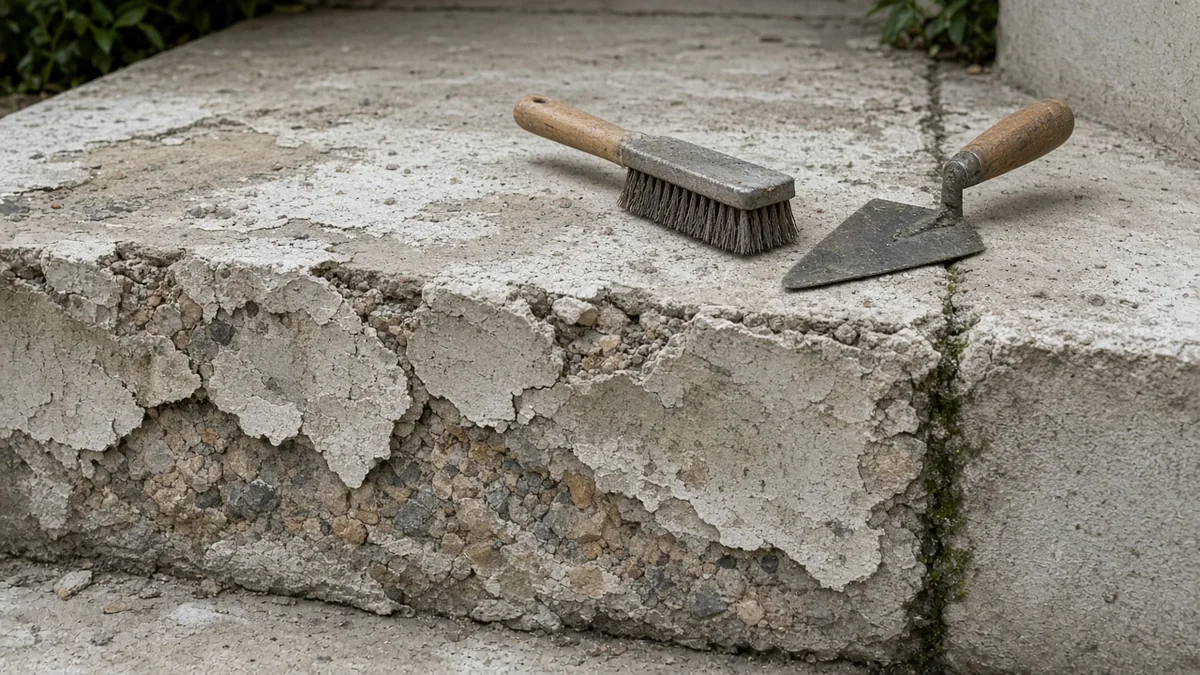
Concrete spalling is what you have when the surface of a slab, step or wall starts to flake, pit or pop off in thin layers or small craters. The concrete under the flake often looks dull or stony. It is different from a single crack running across a driveway, and it is different from one broken corner on a step. The damage starts at the surface, then works deeper if water and freeze-thaw cycles keep getting in.
This guide covers why spalling happens, how to tell a small patch job from a bigger problem, and how to repair a shallow area with a polymer-modified patch. It is general homeowner how-to, not a structural inspection. If the slab sounds hollow, if rusted steel is showing, or if the flaking covers a large part of a driveway or a load-bearing step, stop and get a professional opinion. For a single crack, use how to fix cracks in concrete. For a worn tread, use how to patch concrete steps.
What concrete spalling looks like
Spalling can show up as:
- Thin, coin-sized to palm-sized flakes lifting off the surface
- Rough, pitted patches where the smooth finish has gone
- A sandy or stony texture under the flake
- Scaling that looks like the top sixteenth or eighth of an inch has peeled
- In later stages, deeper craters and, sometimes, rust stains from steel inside the concrete
It often starts in spots that stay wet: the low end of a driveway, the bottom of a step, the edge of a patio by a downspout, or anywhere deicing salt is used all winter. New concrete that was finished too early or overworked can also scale in the first winters.
Popouts are a close cousin: small conical pits, often from a particle in the mix that expanded. A popout is usually a single pit. Spalling is a wider area of surface failure. You can patch both with a similar method if the damage is shallow.
Why concrete spalls
Water is the usual starting point. Concrete is porous. Water soaks into the surface, then expands if it freezes. Repeated freeze-thaw cycles pry the surface apart. Deicing salts make that worse because they increase the number of freeze-thaw cycles and pull more moisture into the slab. If you want the deicer side of that story, see is salt bad for concrete.
Other common causes:
- A weak surface layer. If the slab was finished while bleed water was still on top, or if it was over-troweled, a thin weak skin (sometimes called laitance) can form. That skin is the first thing to flake off.
- Too little air in an exterior slab. Outdoor concrete is often mixed with tiny air bubbles so freezing water has room to expand. A mix that was not meant for freeze-thaw weather is more likely to scale.
- Water that never leaves. Poor drainage, a patio that slopes toward the house, or a joint that holds water will keep the surface wet.
- Rusting reinforcement. If water reaches steel mesh or rebar, the rust expands and can push the cover off. That is a deeper problem than a surface patch will solve.
You do not have to name the exact cause to repair a small, shallow patch. You do need to fix standing water and ease up on harsh deicers, or the same spot will flake again.
When a patch is enough, and when it is not
A homeowner patch is reasonable when:
- The damage is shallow — you are looking at flakes and pits, not a broken slab
- The concrete around the area is sound (it does not crumble when you scrape it)
- No rusted steel is showing
- The area is a manageable size, such as a few patches on a patio or a section of walk
Pause and call a contractor when:
- You can see rusted rebar or mesh
- A large share of a driveway, garage floor or porch has scaled
- The slab sounds hollow when you tap it
- A step or landing has lost a deep chunk, not just a surface skin
- The concrete is heaving, settling or cracked through
Widespread scaling can sometimes be a candidate for an overlay rather than dozens of small patches. That is the job of how to resurface concrete, and only if the base is still sound. Do not resurface over loose, flaking concrete. The overlay will come off with the weak layer.
How to repair spalling concrete
Work on a day when the temperature will stay in the range printed on the patch product — often above about 50°F, and not if a freeze is due that night. If you are in a cold snap, wait. Our notes on pouring concrete in cold weather apply to patches as well: a patch that freezes early can fail.
1. Chip back to sound concrete
Use a hammer and cold chisel, or a small masonry chipping hammer, and remove every loose flake. Keep going until the surface you leave does not crumble or sound hollow. Undercut or square the edges slightly so the patch is not a thin feather sitting on a slick skin. Blow or brush out the dust. A shop vacuum helps.
If you hit rusted steel, stop. A surface patch will not fix that. The rust has to be cleaned or the steel replaced, and the cover rebuilt, which is usually pro work.
2. Clean and dampen
The hole should be free of dust, oil, leaves and loose sand. If the area is oily, clean that first with the method in how to remove oil stains from concrete. Most polymer-modified patching products want a saturated surface that is damp, not glossy with standing water. Follow the bag: some systems use a bonding slurry or a labeled bonding agent instead of, or as well as, dampening.
3. Mix a patch made for the job
For exterior slabs, steps and driveways, use a polymer-modified concrete patch or a repair mortar labeled for the orientation you need (horizontal, or vertical if you are on a riser). Sand mix or leftover bagged concrete can be too stiff or too weak in a thin repair. Read the minimum and maximum thickness on the bag. If your pit is deeper than one lift allows, pack it in layers as the maker directs.
Mix a small batch you can place in a few minutes. The mix should be firm enough to hold a shape, not soupy. Extra water weakens the patch and makes shrinkage cracks more likely.
4. Pack, finish and cure
Press the mix into the undercut edges first, then fill the rest, tamping it so there are no voids. Level it with the surrounding concrete. Match the nearby texture — a light broom pass on a sidewalk, a smoother trowel on an indoor slab — while the patch is still workable.
Keep the patch damp and protected while it cures, following the product's time window. A plastic sheet or a curing blanket in cool weather helps. Do not run a car over a driveway patch the same day. Give it the cure time on the label, which is often a day or more for foot traffic and longer for vehicles.
5. Seal after the repair has cured
Once the patch and the surrounding slab are fully cured and dry, a quality concrete sealer can slow the next round of water and salt damage. Details are in how to seal a concrete driveway. Do not seal over a damp patch or you can trap moisture.
How to keep spalling from coming back
A good patch will still fail if the surface stays wet and salty all winter.
- Fix downspouts and grading so water does not pond on the slab.
- Use a sealer on a clean, dry surface before the first hard freeze, and reapply on the schedule the product gives.
- Choose a deicer that is gentler on concrete, and wait until new concrete has cured before you use any salt. The salt guide above lists safer options and first-winter rules.
- Clear standing meltwater when you can. A slab that drains dries faster and goes through fewer freeze-thaw cycles.
- On a new pour, do not finish the surface while bleed water is still sitting on top, and give the slab a proper cure. That is the best time to prevent a weak skin from forming.
If several patches have already failed in the same area, the slab may need drainage work or an overlay, not another thin fill.
Frequently asked questions
What causes concrete spalling?
The usual cause is water in the surface that freezes and expands, often made worse by deicing salt, poor drainage or a weak finish layer. Rusting steel inside the slab can also push the cover off, which is a deeper problem than a surface flake.
Can you repair spalling concrete yourself?
Yes, if the damage is shallow, the surrounding concrete is sound and no rusted steel is showing. Chip loose material back to a firm edge, clean it, and fill it with a polymer-modified patch labeled for exterior use. Call a pro for widespread scaling, hollow-sounding slabs or exposed reinforcement.
What is the difference between spalling and a crack?
A crack is a break through the concrete, often a line. Spalling is the surface flaking or pitting. You can have both on the same slab. Fill the crack with a crack method, and patch the flaking as described here.
How soon can I drive on a spalling repair?
Follow the patch product's label. Many products need at least a day before foot traffic and longer before a car. Cold weather stretches that timeline. Do not assume a patch is ready the same afternoon.
Will sealing stop concrete from spalling?
A sealer can slow water and salt from soaking in, which helps prevent new scaling, but it will not glue loose flakes back down. Remove and patch the damaged surface first, let it cure, then seal a dry slab.
Should I resurface a driveway that is spalling?
Only if the base is sound and all loose material has been removed. An overlay on flaking concrete will peel. Small, shallow areas are usually better as patches. Large, uniform wear can be a resurfacing job once the surface is sound.