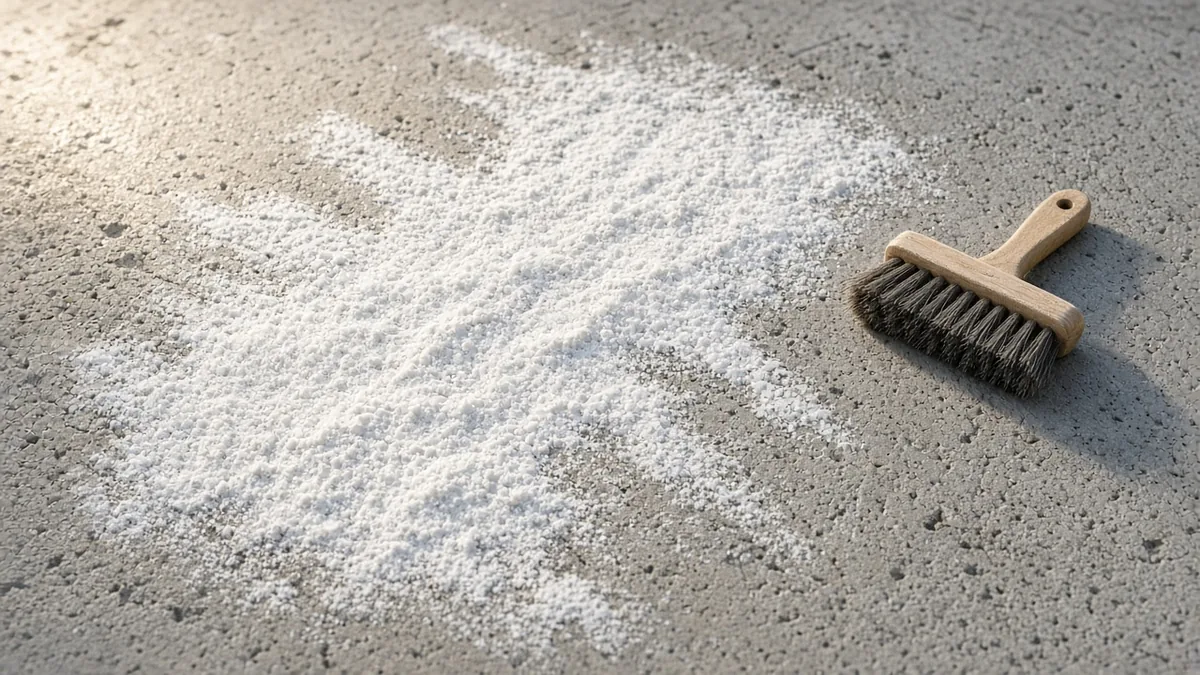
Efflorescence on concrete is a white, powdery or crusty deposit left on the surface when water moves through the slab or wall and then evaporates. The water carries dissolved salts. When it dries, the salts stay behind as a film, a haze or a thicker crust. It is usually a surface issue, not a stain soaked into the mix, and it is not the same thing as mold, oil or peeling paint.
This guide explains how to recognize it, how to remove light and stubborn deposits, and how to slow it down by cutting off the moisture that feeds it. It is practical homeowner how-to, not a lab analysis of your mix. If the white material hides deep flaking, rust stains or a wet basement wall that never dries, get a professional look before you coat anything.
What efflorescence looks like
Typical signs:
- A white or grayish powder you can often brush off
- A chalky haze on a driveway, patio, garage floor or block wall
- A crust in pores, joints or at the base of a wall
- Marks that seem to fade after rain and return when the surface dries
- Deposits that show up after the first wet weeks on a new pour, or after a wet season on an older slab
It often appears where water has a path: the bottom of a retaining wall, a patio next to a downspout, the face of a basement wall, or a garage floor that wets from a driveway. New concrete can show a light bloom as leftover salts work out of the mix. That first bloom is common and often eases once the slab has dried and been cleaned.
How it is different from stains, mold and spalling
A few look-alikes cause people to grab the wrong cleaner.
- Oil and rust stains sit in the surface and usually look brown, black or orange. They do not brush off as a white powder. Use how to remove oil stains from concrete for grease, not this method.
- Mold or mildew is often darker, and it can be slimy or fuzzy. Efflorescence is mineral, not growth. If you are unsure, look at texture and color: a dry white powder that returns after wetting and drying is usually salt.
- Paint haze or leftover film may smear or soften with a coating remover. Salt usually dissolves or loosens as crystals, not as a paint skin.
- Spalling is the concrete itself flaking off. You will see pits and loose shards, not just a film on top. Repair that first with how to repair concrete spalling. Cleaning salts off a failing surface will not fix the flake.
If you rub the spot with a dry finger and you pick up a chalky residue, you are probably looking at efflorescence.
What causes the white salt deposit
Three things have to be in play: salts in the concrete, masonry or soil; water to dissolve and carry them; and a drying face where the water can evaporate. Remove any one of those and new deposits slow down or stop.
The salts can come from the cement, the sand or gravel, the ground under the slab, or water that has been sitting against a wall. The water can be rain, irrigation, melt, a plumbing leak, or moisture rising from damp soil. The drying face is usually the surface you can see.
That is why washing the white off, without changing the water path, often gives you a clean week and then a new haze. Cleaning is still worth doing. It just is not the whole job.
On a new slab, a little efflorescence as the concrete cures and dries is common. Let the surface harden and dry, brush off the powder, and wait before you stain, paint or seal. If you lock a wet, salty surface under a coating, you can trap moisture and get a blotchy finish. For coating work later, see how to stain concrete and how to paint a concrete patio.
How to remove efflorescence from concrete
Start with the gentlest method that works. Aggressive cleaners are for crust that dry brushing will not lift, and they should be tested in a small corner first.
1. Dry brush and vacuum
Use a stiff dry brush — a nylon masonry brush is enough for most patios and driveways — and sweep the powder off. Follow with a shop vacuum so you do not just spread the salt into joints. Do this on a dry day. Many light blooms end here.
2. Rinse and see whether it returns
After the dry pass, rinse with clean water and let the surface dry fully. If the white does not come back after a few dry days, you may be done. If a haze returns in the same map, there is still a moisture path, and you will need both a better clean and a moisture fix.
Avoid blasting the surface with a high-pressure washer on a close tip. You can drive salts deeper into the pores, roughen a finish, or scar a young slab. If you use a washer at all, keep the pressure moderate, use a wide fan, and stay far enough back that you are rinsing, not etching.
3. Use a cleaner labeled for masonry efflorescence
For a crust that brushing and rinsing do not remove, use a product labeled for efflorescence on concrete or masonry and follow the label exactly: dilution, dwell time, rinsing and any requirement to neutralize. Test a small, hidden area first. Wear the eye and skin protection the label calls for, and keep runoff out of plants and storm drains if the product warns you to.
Do not mix cleaners, and do not invent an acid recipe. Household acids can etch a finish, discolor integral color, and damage some sealers. A labeled masonry cleaner is the safer path when dry methods fail.
Rinse thoroughly and let the slab dry. You should see whether the deposit was only on the surface or whether more salt is still being carried up from below. If a fresh haze appears as it dries, move to moisture control before you clean a third time.
4. Wait until the surface stays dry, then consider a sealer
A sealer is not a cleaner. It can slow water from soaking in, which helps on a driveway or patio that gets rain and melt, but it will not stop moisture that is being pushed through from the back of a wall or up from wet soil. Seal only after:
- The deposits have been cleaned
- The surface has stayed dry enough that a new bloom has not immediately returned
- The product is meant for exterior concrete and the weather fits the label
How to seal a concrete driveway walks through prep and timing. Sealing a still-wet, still-salting slab can trap a mottled white film under the coating.
If the whole surface needs a refresh, our guide to cleaning a concrete patio safely covers mildew, rust and grease too.
How to slow efflorescence down
Cleaning without a moisture plan is why the white keeps winning.
- Move downspouts and splash blocks so roof water does not sheet across the slab or sit at the base of a wall.
- Regrade soil so it falls away from garage floors, basement walls and patio edges.
- Fix irrigation that sprays the same wall or joint every morning.
- Open or repair joints that trap water against a step or slab edge.
- Give a new pour time to dry before you seal, stain or paint.
- On a basement or retaining wall that stays damp, find the water source (grading, gutters, a leak) rather than coating over a wet face.
If the deposit is on the inside of a basement wall, the water is often coming through the wall or up from the slab, not just from a spill on the surface. Interior paint will not solve that. Drainage and a dry wall come first.
A simple inspection order
Work in this order so you do not seal or stain a problem you have only half identified. First confirm it is a dry white residue and not oil, rust or mold. Second, dry brush and vacuum, then rinse and wait. Third, if the haze returns in the same shape, treat the water path — gutters, grading, a leak or a wet joint — before you clean again. Fourth, use a labeled masonry cleaner only on crust that is still there after a dry-and-rinse pass. Fifth, wait until the surface stays clean and dry, then decide whether a sealer makes sense.
If you skip straight to a sealer or a stain, you often lock a blotchy film in place and still have moisture moving through the slab. A little patience here saves a second prep job later.
Frequently asked questions
What is efflorescence on concrete?
It is a white salt deposit left when water moves through concrete or masonry and evaporates on the surface. The salts stay behind as a powder, haze or crust. It is a mineral deposit, not oil and not mold.
How do you remove efflorescence from concrete?
Start with a dry stiff brush and a vacuum, then rinse and let the surface dry. For a stubborn crust, use a cleaner labeled for masonry efflorescence, test a small area, and rinse well. Fix the water path or the haze will often return.
Is efflorescence harmful?
The deposit itself is usually a cosmetic problem on a sound slab. It can, though, be a sign that water is moving through the concrete. If you also see flakes, rust, soft spots or a wall that never dries, treat that as a moisture or repair issue, not just a cleaning job.
Does sealing stop efflorescence?
A sealer can reduce water soaking in from the top, which helps on many patios and driveways. It will not reliably stop moisture coming from below or through a wall, and it should go on only after the surface is clean and has stayed dry.
How is efflorescence different from hard-water stains or oil?
Hard-water spots are usually from water that dried on top of a sealed or smooth surface. Oil is dark and greasy and needs a different cleaner. Efflorescence is salt from inside or under the concrete, and it often returns in the same pattern after a wet-dry cycle.
Should I worry about efflorescence on new concrete?
A light bloom on a new slab is common as the concrete dries. Brush it off, give the slab time to cure and dry, and wait before staining, painting or sealing. If heavy deposits keep coming back, look for extra water from irrigation, grading or a joint that does not drain.