- What you need
- Step 1: Clear and sweep the patio
- Step 2: Protect plants and wet the slab
- Step 3: Scrub with a mild cleaner
- Step 4: Rinse thoroughly
- Step 5: Pressure wash only where it is needed
- How to clean a concrete patio without a pressure washer
- How to remove common patio stains
- After cleaning: seal and protect
- How often should you clean a concrete patio?
- Common mistakes to avoid
- Planning a new patio instead?
- Frequently asked questions
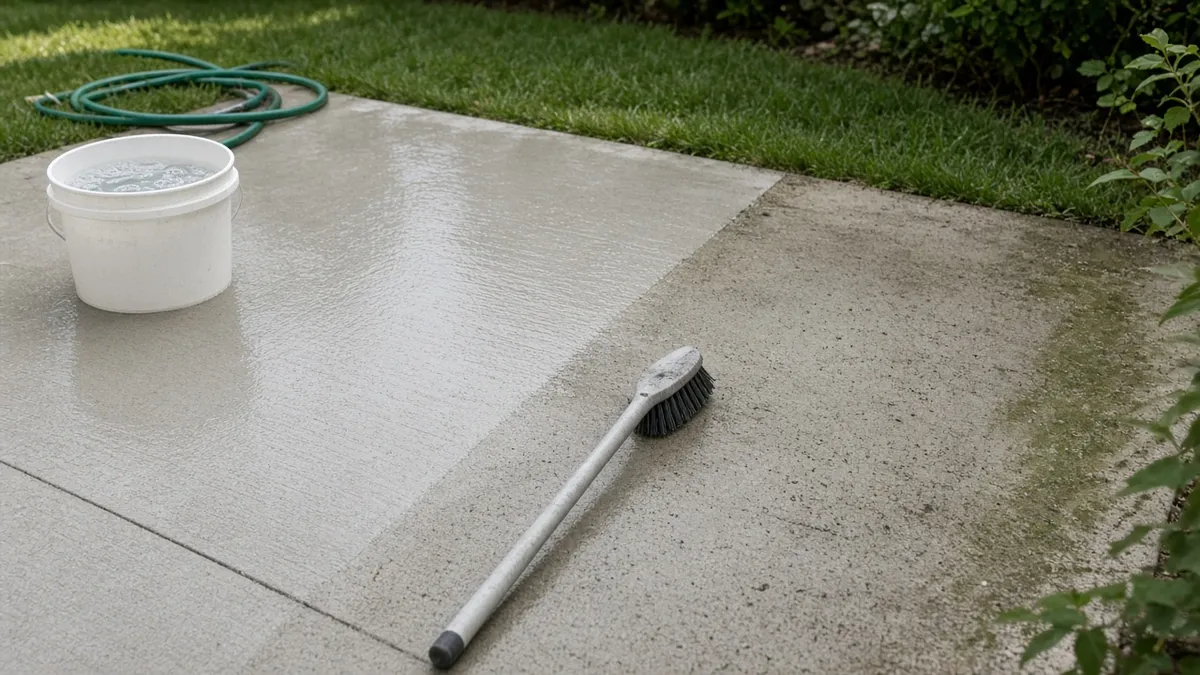
The best way to clean a concrete patio is to work from gentle to strong: clear and sweep it, wet the slab, scrub with a mild cleaner such as dish soap or oxygen bleach, rinse, and only then reach for a pressure washer on stubborn grime. Most patios come clean with the first three steps. Learning how to clean a concrete patio this way protects the surface, any sealer on it, and the plants around it.
Below is the full routine, the cleaners that are worth buying, how to pressure wash without etching the surface, and how to deal with the usual stains: mildew, rust, grease, leaves and white mineral bloom.
What you need
You do not need much for a typical patio. Gather these before you start:
- A stiff push broom and a leaf blower or rake
- A garden hose with a spray nozzle
- A stiff nylon scrub brush on a pole (avoid wire brushes on most concrete, as they can scratch and leave metal bits that rust)
- A bucket and a pump sprayer or watering can
- A cleaner: plain dish soap, an oxygen bleach powder (sodium percarbonate) or a concrete cleaner made for outdoor slabs
- Rubber gloves, safety glasses and closed shoes
- Optional: a pressure washer with a 25-degree tip or a surface-cleaner attachment
Check the weather, too. A mild, overcast day is ideal. Hot sun dries cleaner on the slab before it can work, and freezing nights can turn trapped water into surface damage on older concrete.
Step 1: Clear and sweep the patio
Move furniture, grills, planters and rugs off the slab. Blow or sweep off leaves, dirt and grit. Grit acts like sandpaper under a scrub brush, so the cleaner the starting surface, the better the result. Look closely at the joints and the edges along the house, where dirt and seeds pile up.
While the patio is empty, note any problem areas: dark mildew patches, rust rings from furniture feet, grease near the grill, or white crusty spots. Each gets its own treatment below.
Step 2: Protect plants and wet the slab
Water nearby beds and lawn edges first. Damp leaves and soil absorb less cleaner. Cover delicate plants with a plastic sheet if you will use anything stronger than soap, and take the sheet off as soon as you finish so plants do not overheat.
Then hose down the whole patio. Concrete is porous; pre-wetting keeps the cleaner on the surface where the dirt is, instead of soaking straight into the slab.
Step 3: Scrub with a mild cleaner
For light dirt, a squirt of dish soap in a bucket of warm water is enough. Pour or spray it on one section at a time, let it sit for a few minutes, and scrub in overlapping passes with the stiff nylon brush.
For green or black growth, oxygen bleach is the better choice. It is sold as a powder that you dissolve in warm water, following the label for the ratio and the dwell time. It lifts organic stains such as algae, mildew, leaf tannin and bird droppings, and it is gentler on plants and nearby surfaces than chlorine bleach.
A few rules keep this step safe:
- Never mix cleaners. Mixing chlorine bleach with ammonia, vinegar or other acids can release toxic gases. Health agencies, including the Washington State Department of Health, warn against mixing bleach with any other cleaner.
- Keep the slab wet while the cleaner works. If it starts to dry, mist it with the hose.
- Work in sections of about one table's worth of patio so you can scrub everything before it dries.
Step 4: Rinse thoroughly
Rinse each section with the hose, pushing the dirty water toward the lawn edge or a drain, not toward the house. Rinse until no suds or film remain. Leftover cleaner can leave a dull haze and attract dirt again.
Let the patio dry for a few hours, then look at it in daylight. If it looks even and clean, you are done. If some areas are still grimy, go to the next step only for those areas.
Step 5: Pressure wash only where it is needed
A pressure washer speeds things up, but too much pressure or too narrow a tip can etch the surface, expose the sand and stone in the mix, and leave visible stripes. A common recommendation for plain, sound concrete is roughly 2,500 to 3,000 PSI with a 25-degree (green) tip, held 6 to 12 inches from the surface and kept moving. Stamped, colored or sealed patios need a gentler setting.
Good technique matters more than raw power:
- Test in a hidden corner first and look for marks once it dries.
- Start with the wand farther from the slab and move closer only if needed.
- Use steady, overlapping passes in one direction, like mowing a lawn.
- Never use a zero-degree (red) tip on a patio. It cuts lines into concrete.
- A rotary surface-cleaner attachment gives the most even result on big slabs.
Skip the pressure washer on new concrete. Give a fresh pour about 28 days to gain strength first; our guides on driving on new concrete and drilling into new concrete explain why that early month matters. Also avoid pressure washing over cracks or flaking areas, which can make them worse. If your surface is already scaling, read concrete spalling repair before you clean.
How to clean a concrete patio without a pressure washer
You can get a very good result with just a hose, a brush and patience. Use oxygen bleach for organic stains, let it dwell for the full time on the label, and scrub twice if needed. A long-handled deck brush saves your back. For textured broom-finish slabs, scrub across the lines and then along them so the bristles reach the grooves. If you are not sure what finish you have, our page on broom finish concrete shows what it looks like.
This approach is also kinder to sealers, painted patios and decorative finishes. If you have painted or stenciled your patio, stick to soap and a soft brush; our guide to painting a concrete patio covers how to keep the paint looking good.
How to remove common patio stains
Different stains need different fixes. Treat them after the general clean, when you can see what is left.
| Stain | What usually works | Notes |
|---|---|---|
| Green algae, black mildew | Oxygen bleach solution, dwell, scrub, rinse | Improve drainage and sunlight to stop it coming back |
| Leaf and tannin marks | Oxygen bleach or a concrete cleaner | Sunlight also fades them over a few weeks |
| Grease and oil (grill area) | Degreaser or dish soap paste, scrub, rinse; repeat | See our oil stain removal guide |
| Rust rings | A rust remover labeled for concrete | Test first; some can lighten colored concrete |
| White, powdery bloom | Dry brush first, then a light rinse | This is often efflorescence; see efflorescence on concrete |
| Ice-melt residue | Rinse well in spring | Some deicers harm concrete; see is salt bad for concrete |
Be careful with acid-based cleaners, including muriatic acid. They etch concrete, can damage metal and plants, and need protective gear and careful neutralizing. For a normal patio clean, they are rarely needed. If a product's label says it is for etching or removing efflorescence, follow the label exactly and never combine it with bleach.
After cleaning: seal and protect
A clean, dry patio is the right time to look at sealing. A penetrating or film-forming sealer slows stains, reduces water absorption and makes the next clean easier. Most sealers need the concrete fully dry before application, often a day or more after washing, so check the label. The steps are much the same as in our guide to sealing a concrete driveway.
Cleaning is also a good time to inspect the slab. Hairline cracks are common and easy to fill; how to fix cracks in concrete walks through it. A tired, pitted surface may be a candidate for resurfacing rather than repeated scrubbing.
How often should you clean a concrete patio?
For most homes, a sweep every week or two and a full wash once or twice a year is plenty. Spring cleans off winter grime and deicer residue; late fall clears leaves and mildew before cold weather. Shady, damp patios that grow algae may need an extra oxygen-bleach scrub in between.
Regular light cleaning is easier on the concrete than rare, aggressive cleaning. The less often you need a pressure washer, the longer the surface lasts.
Common mistakes to avoid
- Using a zero-degree tip or holding the wand too close
- Letting cleaner dry on a hot slab
- Mixing bleach with ammonia, vinegar or acid cleaners
- Pressure washing a patio that is under a month old
- Scrubbing with wire brushes, which can scratch and leave rust marks
- Washing dirty water toward the house foundation
- Sealing before the slab is completely dry
Planning a new patio instead?
If your old slab is beyond cleaning, the concrete calculator will tell you how much concrete a replacement patio needs, including waste.
Cleaning a pebbly patio? Our exposed aggregate concrete guide explains how to wash it without loosening stones.
Frequently asked questions
What is the best way to clean a concrete patio?
Sweep it, pre-wet it, scrub with dish soap or an oxygen bleach solution using a stiff nylon brush, and rinse well. Use a pressure washer only on stubborn areas, with a wide tip and moderate pressure.
Can I clean a concrete patio without a pressure washer?
Yes. A hose, a stiff brush and oxygen bleach handle most dirt, algae and mildew. Let the cleaner sit for the label's dwell time, scrub twice if needed, and rinse thoroughly.
Is bleach safe for cleaning a concrete patio?
Oxygen bleach is the gentler choice for patios and plants. If you use chlorine bleach, dilute it as the label directs, protect plants, rinse well, and never mix it with ammonia, vinegar or other cleaners.
What PSI should I use to pressure wash a patio?
A common recommendation for plain, sound concrete is about 2,500 to 3,000 PSI with a 25-degree tip held 6 to 12 inches away. Use less on stamped, colored or sealed patios, and test in a corner first.
How do I get green algae off my patio?
Apply an oxygen bleach solution, let it dwell, scrub with a stiff nylon brush and rinse. To slow regrowth, improve drainage, trim back plants that shade the slab, and consider sealing once it is dry.
Should I seal my patio after cleaning it?
Sealing a clean, fully dry patio helps it resist stains and water and makes future cleaning easier. Wait until the slab is completely dry, often a day or more, and follow the sealer's label.